
INDIVIDUAL FINANCIAL SECURITY
Tracking whether St. Louis residents can meet basic needs today, save a little for the future, and build a foundation for opportunity.
DATA RESULTS
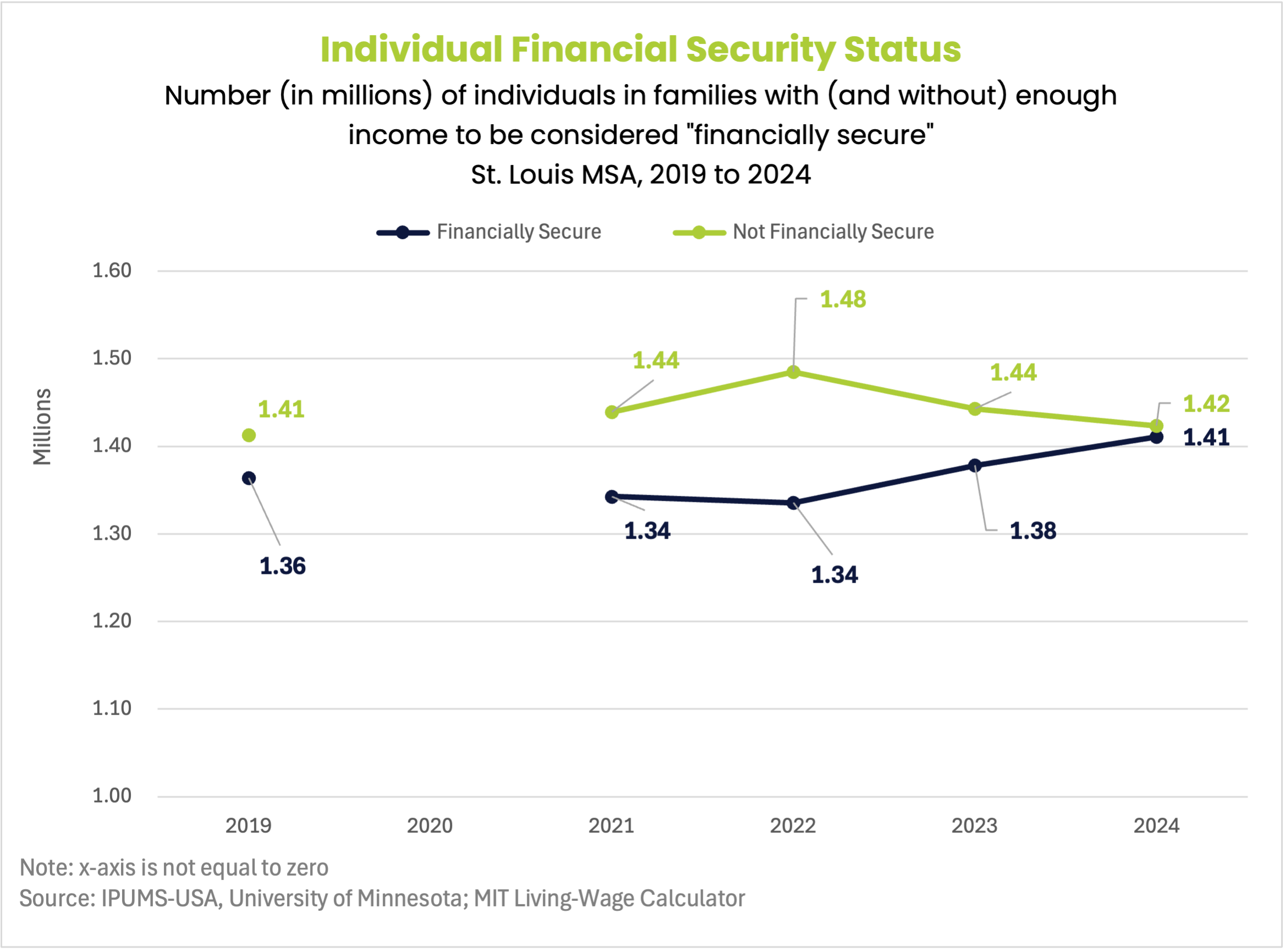
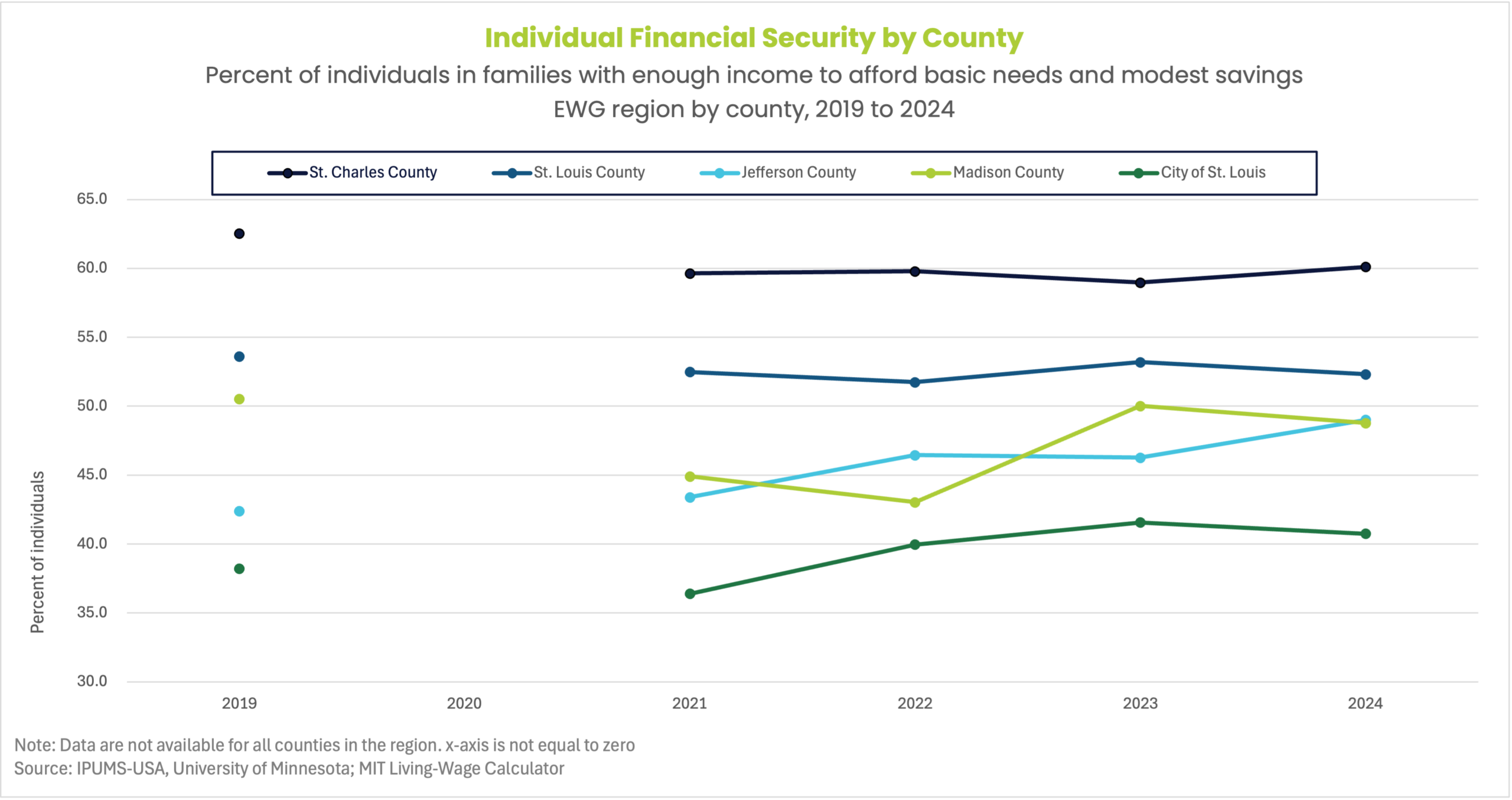
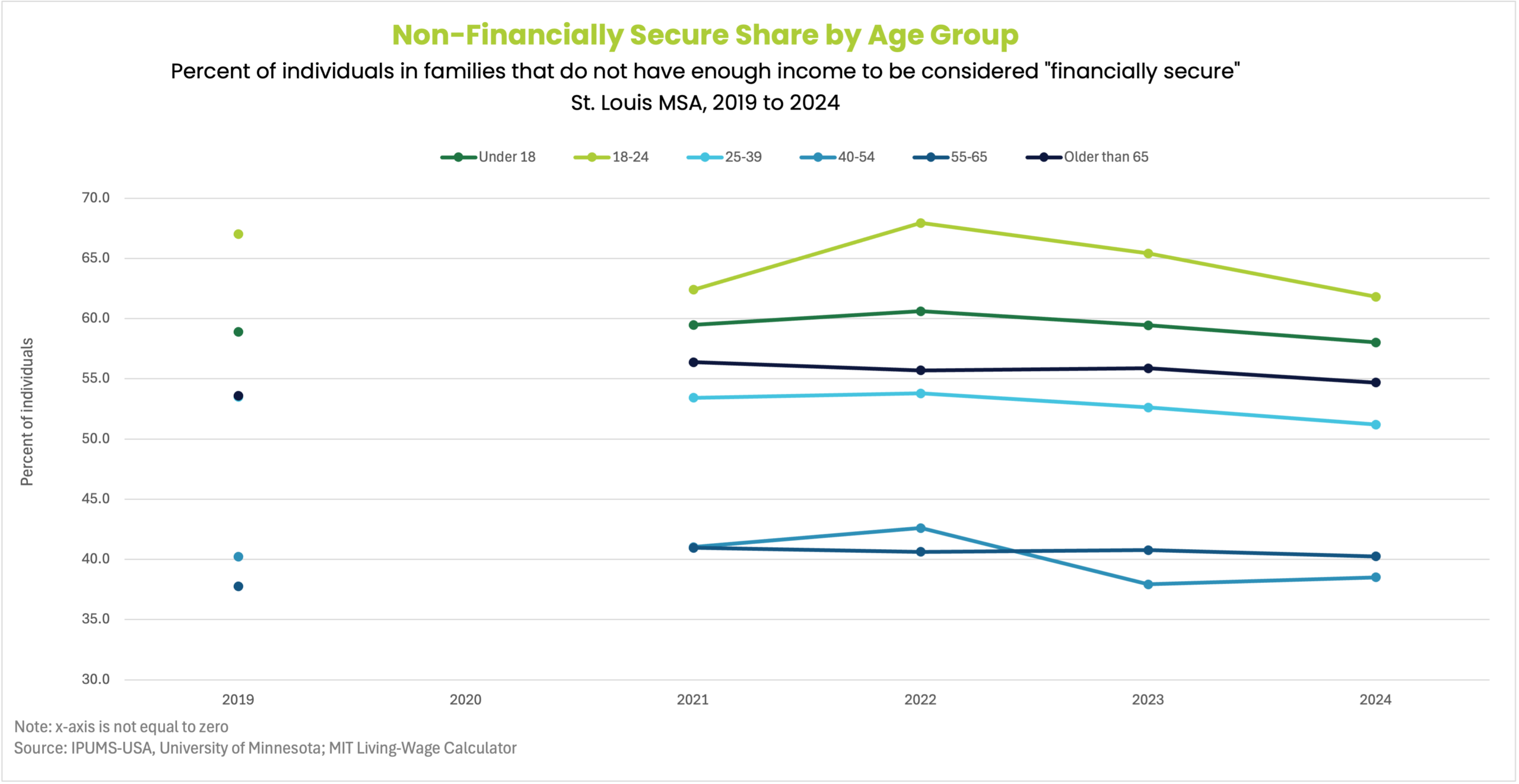
Only half of our residents are financially secure. Now is the opportunity to grow an economy that benefits everyone.
- In 2024, 50.2% of St. Louis residents lived in families that could not cover basic needs and save a minimum of 10% of their income.
- Only 61.2% of families with at least one full-time, year-round worker were financially secure in 2024. Employment alone is not sufficient for stability.
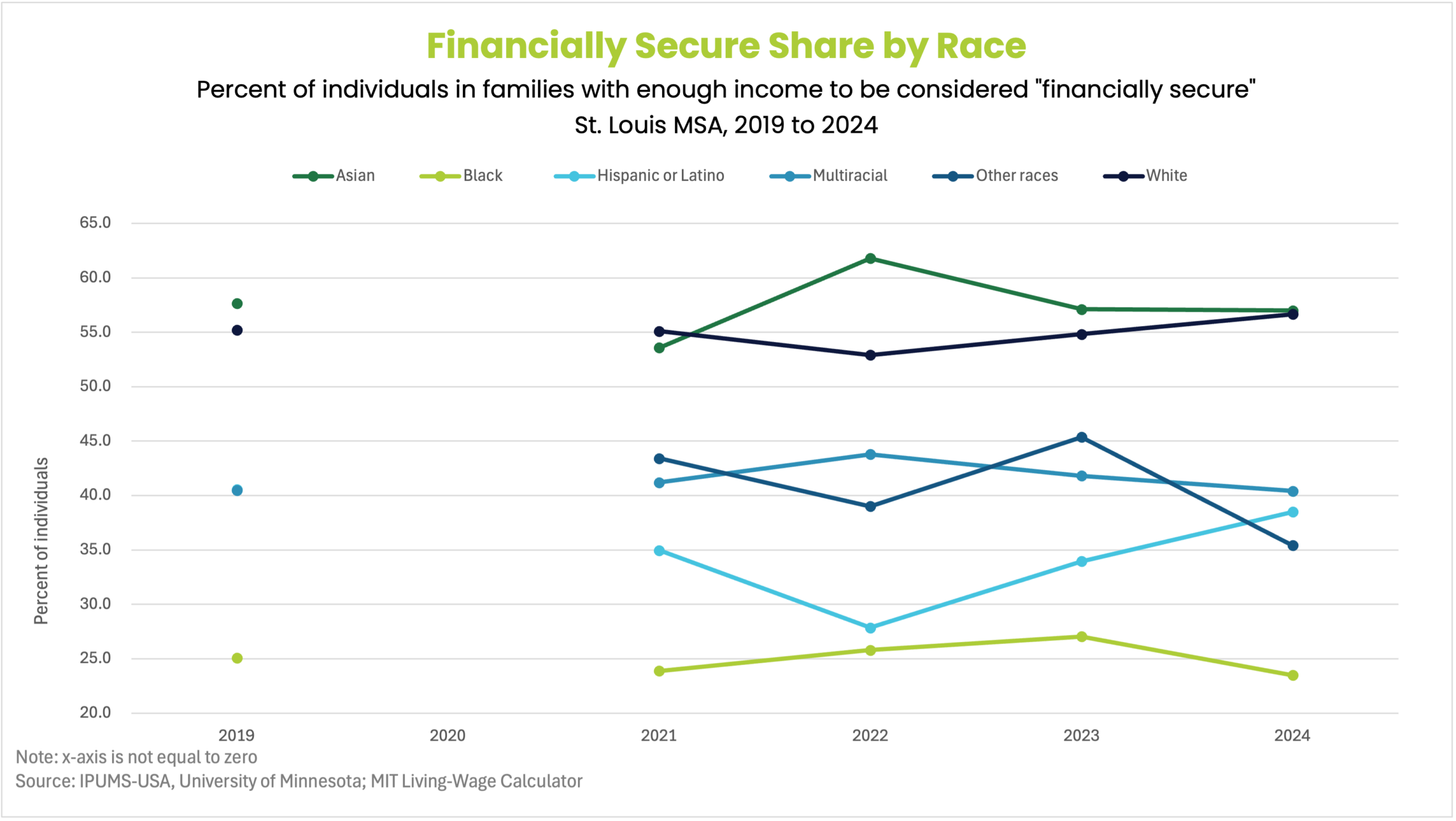
- Disparities persist across population groups: 23.5% of Black residents and 38.5% of Hispanic and Latino residents lived in financially secure families in 2024, compared to 56.6% of White residents.
- Among the 50 most populous metro areas, St. Louis ranked 10th for individual financial security in 2024 at 49.8%, and Raleigh ranked first at 54.1%. By race, St. Louis ranked 17th for White residents at 56.6% and 44th for Black residents at 23.5%. Austin ranked first for Black residents at 42.4%.
WHAT IT IS
Prosperity is the goal. Financial security is the foundation.
Individual Financial Security estimates the share of residents living in families with enough income to:
- Afford average living expenses in the St. Louis region, and
- Save at least 10% of income toward emergencies and future needs.
Together, these represent the baseline conditions required for economic stability. This indicator helps us understand whether families are benefiting from regional economic gains—and whether growth is translating into real security in people’s everyday lives.
If families cannot consistently cover basic needs or save for the future, the regional economy is not working to its full potential.
METHOD
This indicator reflects real‑world costs and real stability, not outdated thresholds.
Individual Financial Security:
- Accounts for current regional costs of living
- Adjusts for family size and composition
- Includes a 10% savings rate, reflecting research showing this level of saving over time helps families build an emergency reserve of roughly six months of expenses
Traditional poverty measures often underestimate today’s costs and rarely account for savings. Individual Financial Security is designed to reflect what families actually need to stay stable in today’s economy.
PROGRESS
Progress means:
- Fewer people lack Individual Financial Security, reducing persistent financial instability
- More people achieve Individual Financial Security, covering essential costs and building at least a 10% savings buffer
- More families build financial resilience through consistent savings, enabling them to plan ahead, weather emergencies, and invest in their future
- Racial, income, and geographic disparities narrow, so progress is genuinely shared.
REGIONAL GROWTH
Inclusive prosperity requires both a growing economy and families with the means to benefit from it.
Inclusive prosperity is about more than economic growth. It’s about whether people can make ends meet, build a small financial cushion, and begin a path toward stability and mobility.
A strong economy makes prosperity possible. Financial security for families makes it real.